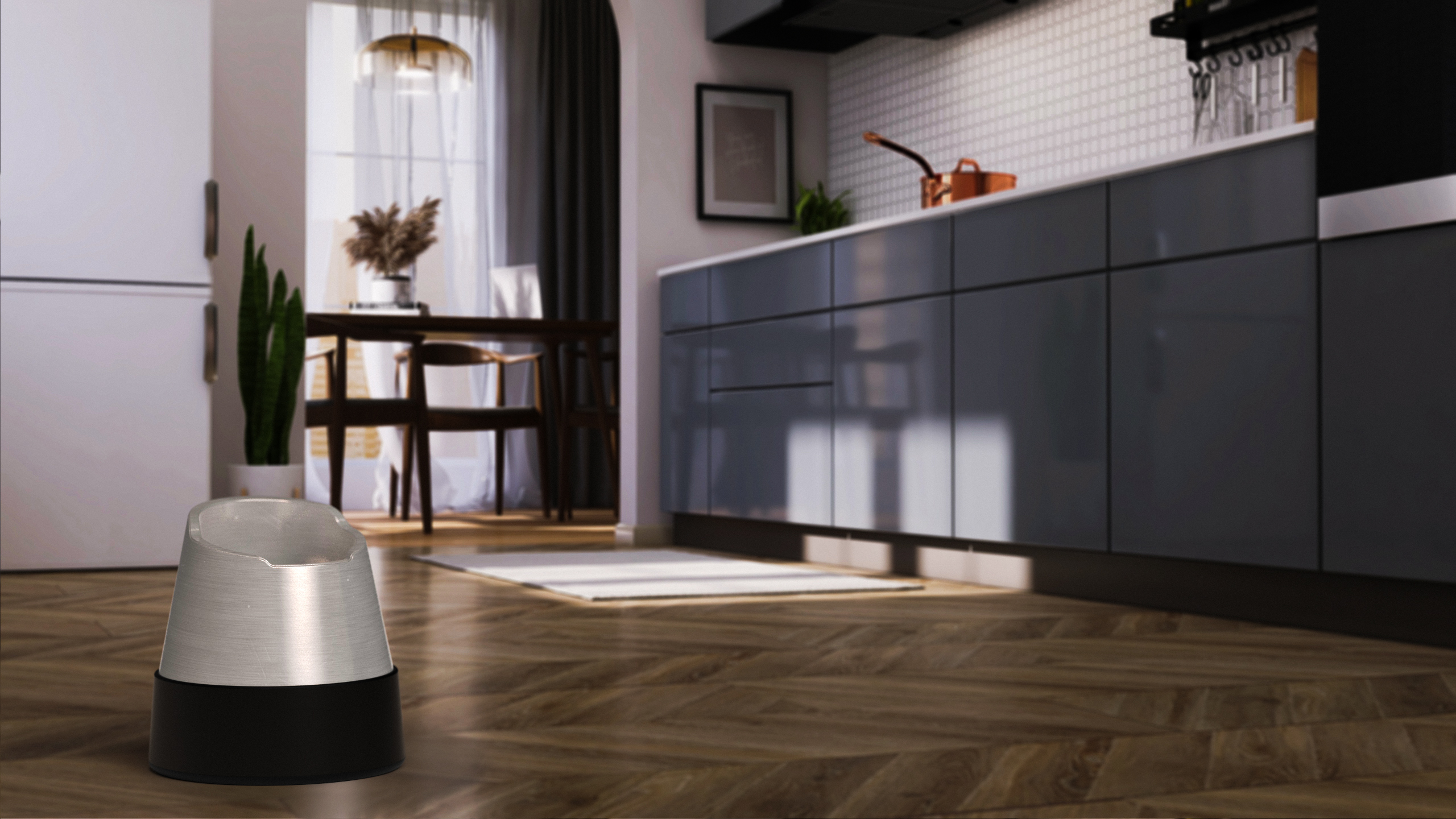
A dog bowl for kitchens that weren't designed to have one.
The Problem
Most pet bowls are an afterthought. Stainless steel or injection-molded plastic — designed for durability, easy to clean, styled for nothing. They sit on kitchen floors next to cabinets that cost hundreds of dollars per linear foot, next to hardware picked out of a catalog, next to everything else that was a decision.
The bowl wasn't a decision. It's just there.
That's the problem. Not that dog bowls are cheap, but that nobody treats them like they should belong. For someone who cares about their kitchen — who buys All-Clad, picks out ceramics, thinks about what goes on the counter — the dog bowl is always the object that gives it away.
The pet product market splits clean: functional objects that are aesthetically inert, and beautiful objects that don't function. Nothing occupies the intersection of premium material language and kitchen placement. That's the brief this bowl answers.
Design Direction
The direction was clear from the start: don't design a dog bowl. Design something that belongs in a kitchen.
Four criteria locked before any form work began:
- Material must borrow from kitchenware, not pet products — the same surface language as what's already in the room
- Form reads as considered without applied decoration — no embossment, no branding, no texture for texture's sake
- Two-material split creates immediate hierarchy — one material for the bowl, one for the base, each doing a different job
- Must work as a stackable system for multi-dog households and retail display
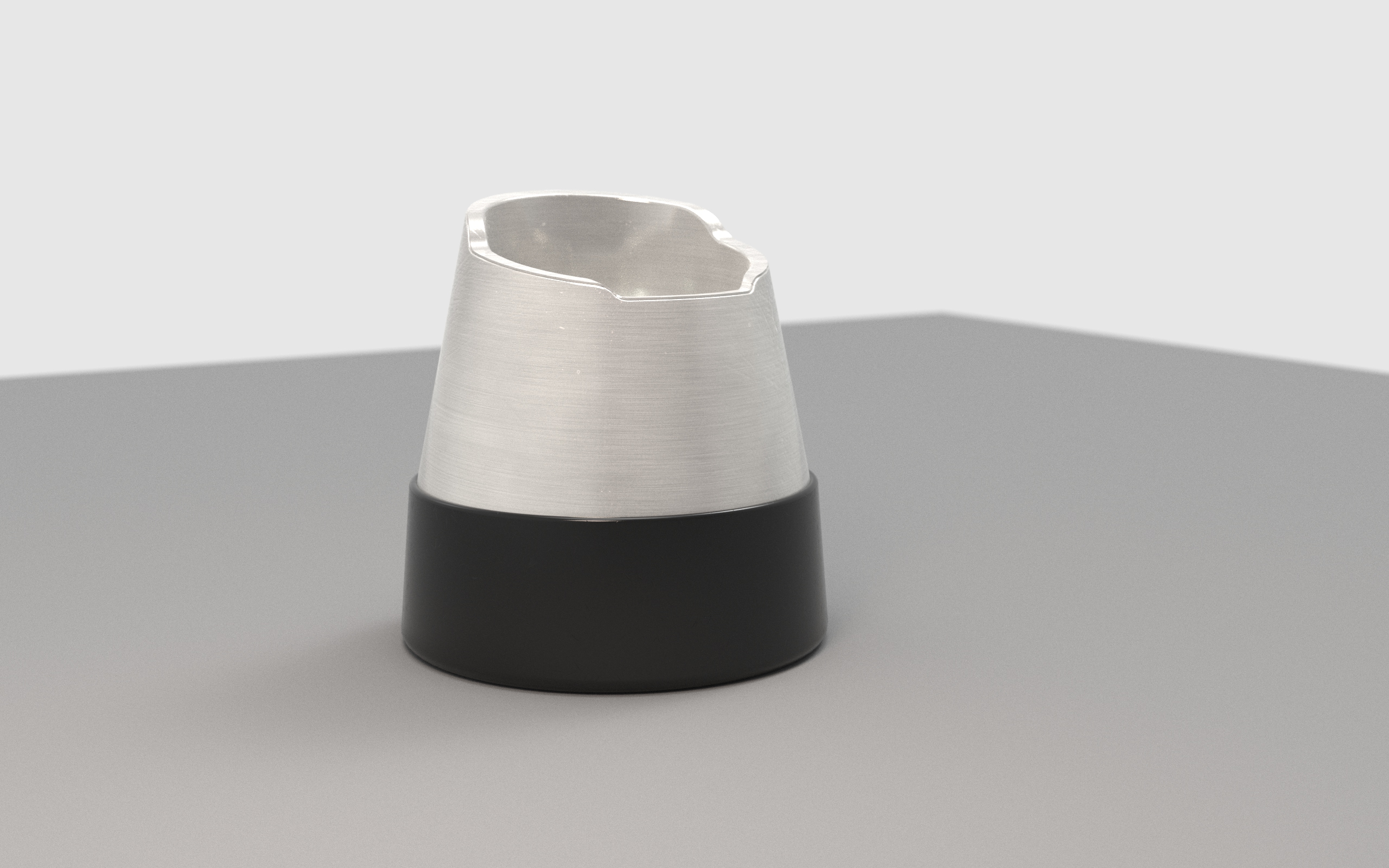
Brushed aluminum for the upper bowl — the same surface you'd find on a quality pan or a salt cellar. Matte black rubber for the base — weighted, grippy, grounded. The two-material split creates immediate visual hierarchy. It reads as considered before you even know what it is.
The rim is asymmetric. Not aggressively — just enough to break from the pure utility of a cylinder. A slight taper and organic lift on one side that softens the form without decorating it. Just the form doing the work.
Asymmetric rim — organic lift without applied decoration
Two-material split — the seam between aluminum and rubber is where the design reads as considered
Modeling
The SolidWorks model started with the rim profile. Getting the asymmetric lift right while maintaining consistent wall thickness took a few iterations — the surface wants to thin out at the high point if you're not careful. Once the upper body was resolved, the base was straightforward: a flanged rubber form that holds the bowl and doesn't move.
KeyShot rendering: brushed aluminum uses an anisotropic shader — flat metallic misses the directional light behavior that makes brushed metal read as brushed. The rubber base is a diffuse material with slight texture, because it needs to read as matte at any distance, not reflective. Close-up it reads as rubber; at distance it reads as matte black.
Kitchen Composite
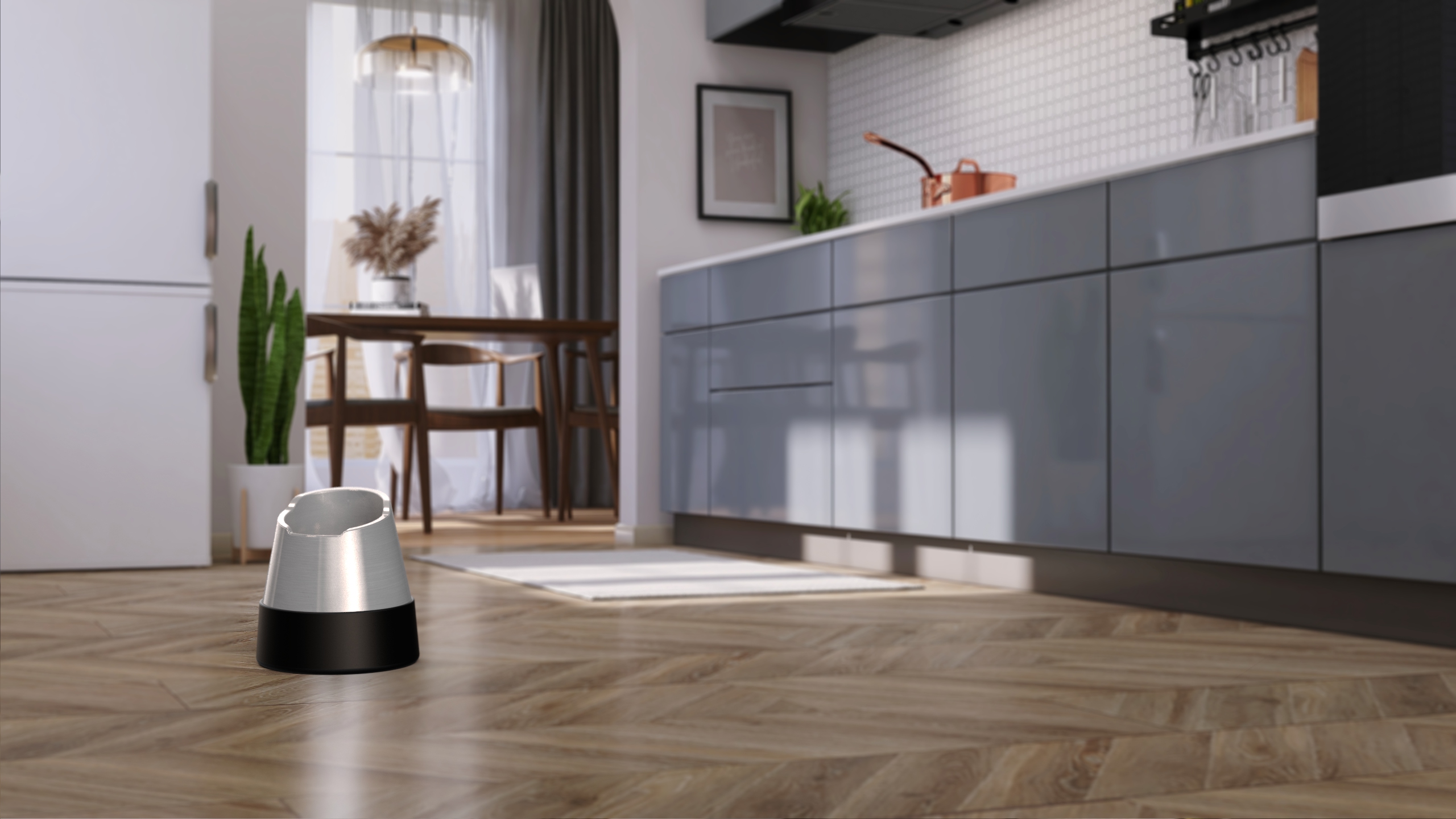
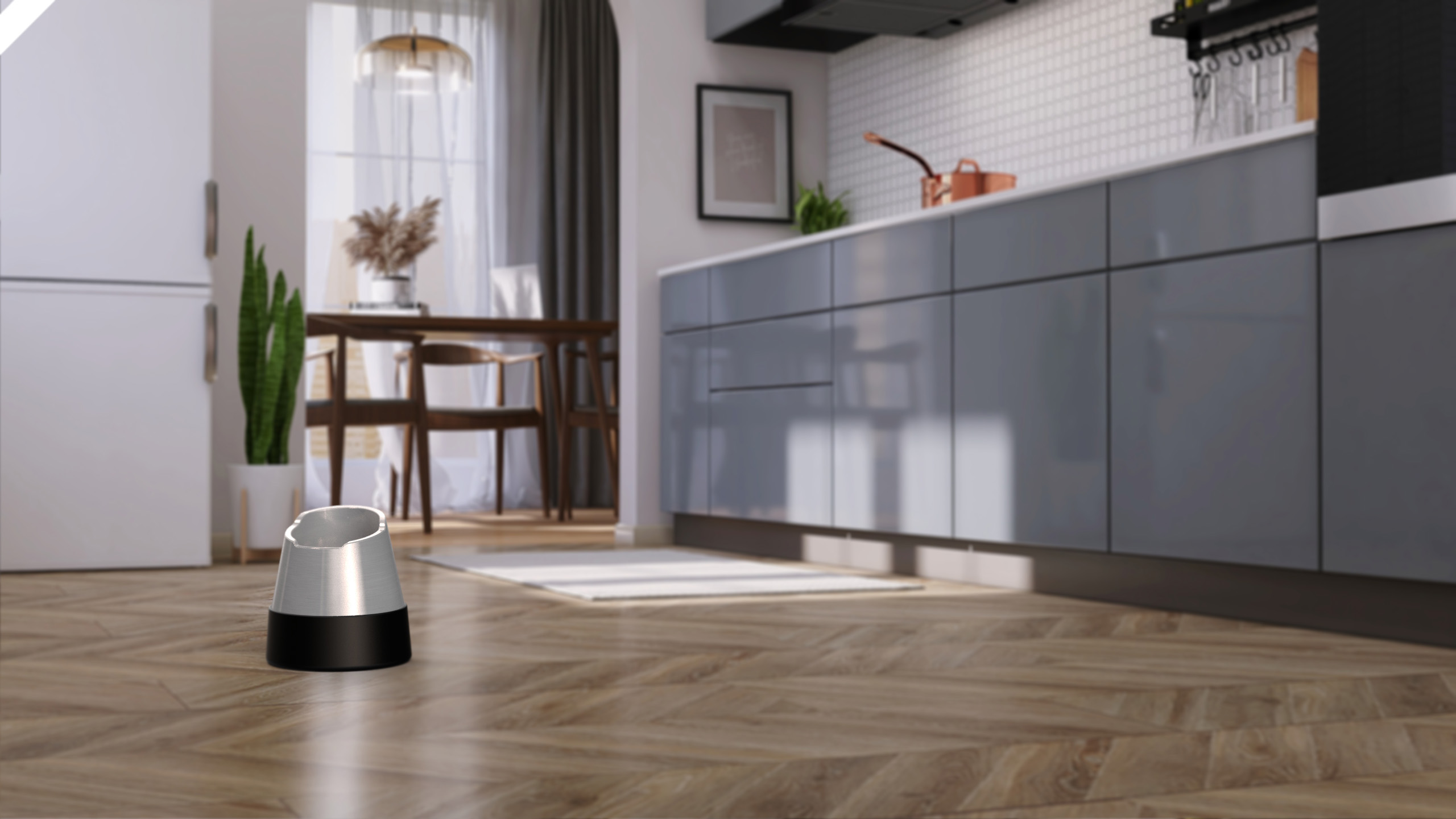
The kitchen composite makes one argument: this bowl belongs somewhere real. That's harder than a technically accurate render. A render that's correct can still look pasted in.
Seven rounds. The workflow: pull a real kitchen photograph with good ambient light, drop in the KeyShot render, match the color temperature and shadow direction in Photoshop, then run a Lightroom grade to unify the scene. The first pass was too cold — the bowl sat in the image like a cutout. By the third iteration the lighting started to integrate. The final version holds.
Stackable Variant
The stackable version uses the same bowl geometry and base with a modified flange — the base accepts a second bowl nested above it. Same footprint, same materials, same visual logic. The exploded view shows the mechanical relationship without a physical prototype.
Stackable configuration — same footprint, nested storage
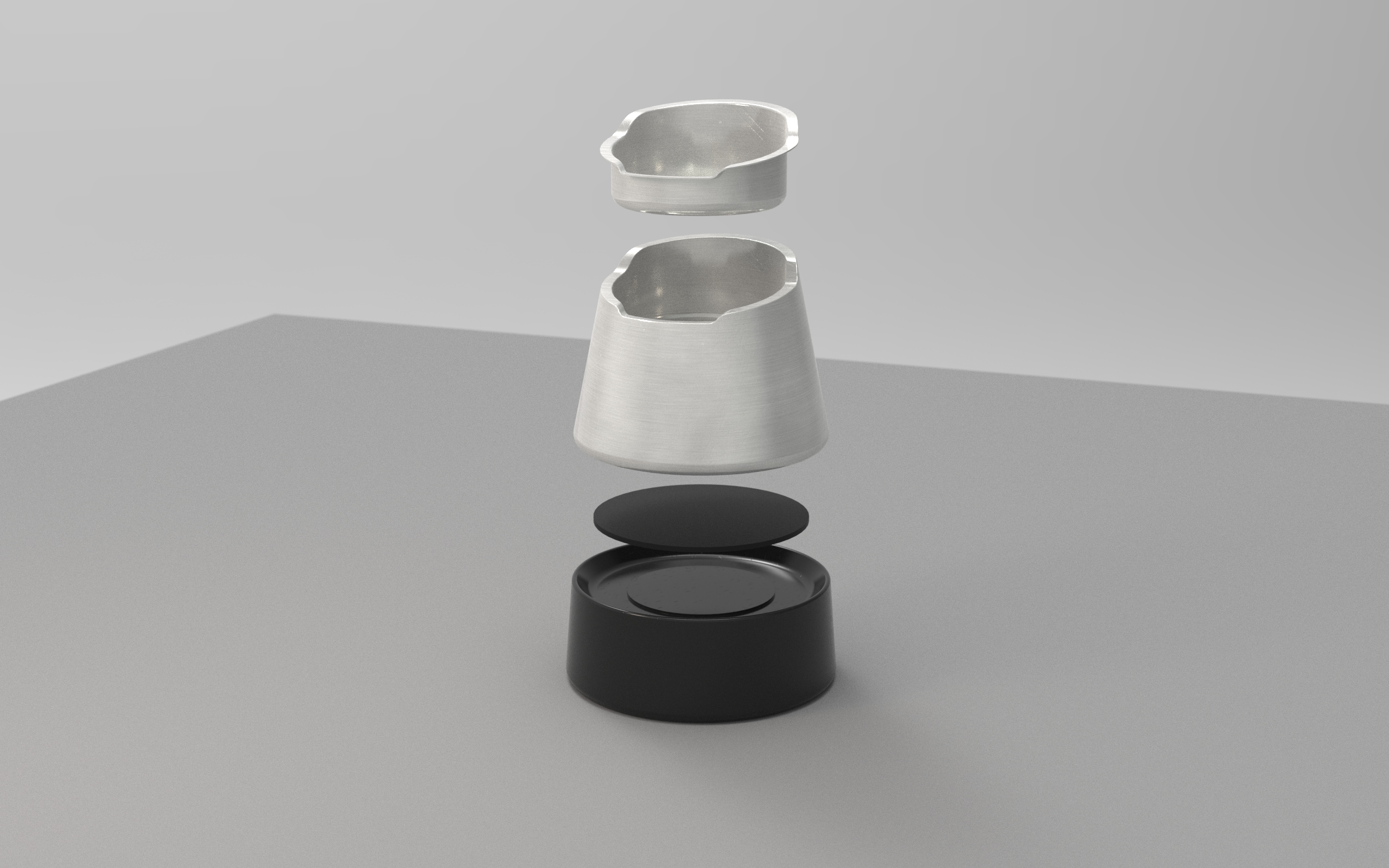
Exploded stack — base holds both bowls, no additional hardware
Final Renders
Three render types, three arguments.
Studio renders: legibility — form and materials must read clearly. Two angles, clean background, nothing competing with the object.
Kitchen composite: placement — the bowl belongs somewhere real. It took until the fifth or sixth iteration to get the ambient light integration right — the moment where the bowl stops looking pasted in and starts looking placed.
Stackable exploded view: systems — the design was thought through beyond a single configuration. Not just a bowl, but a system with mechanical logic.
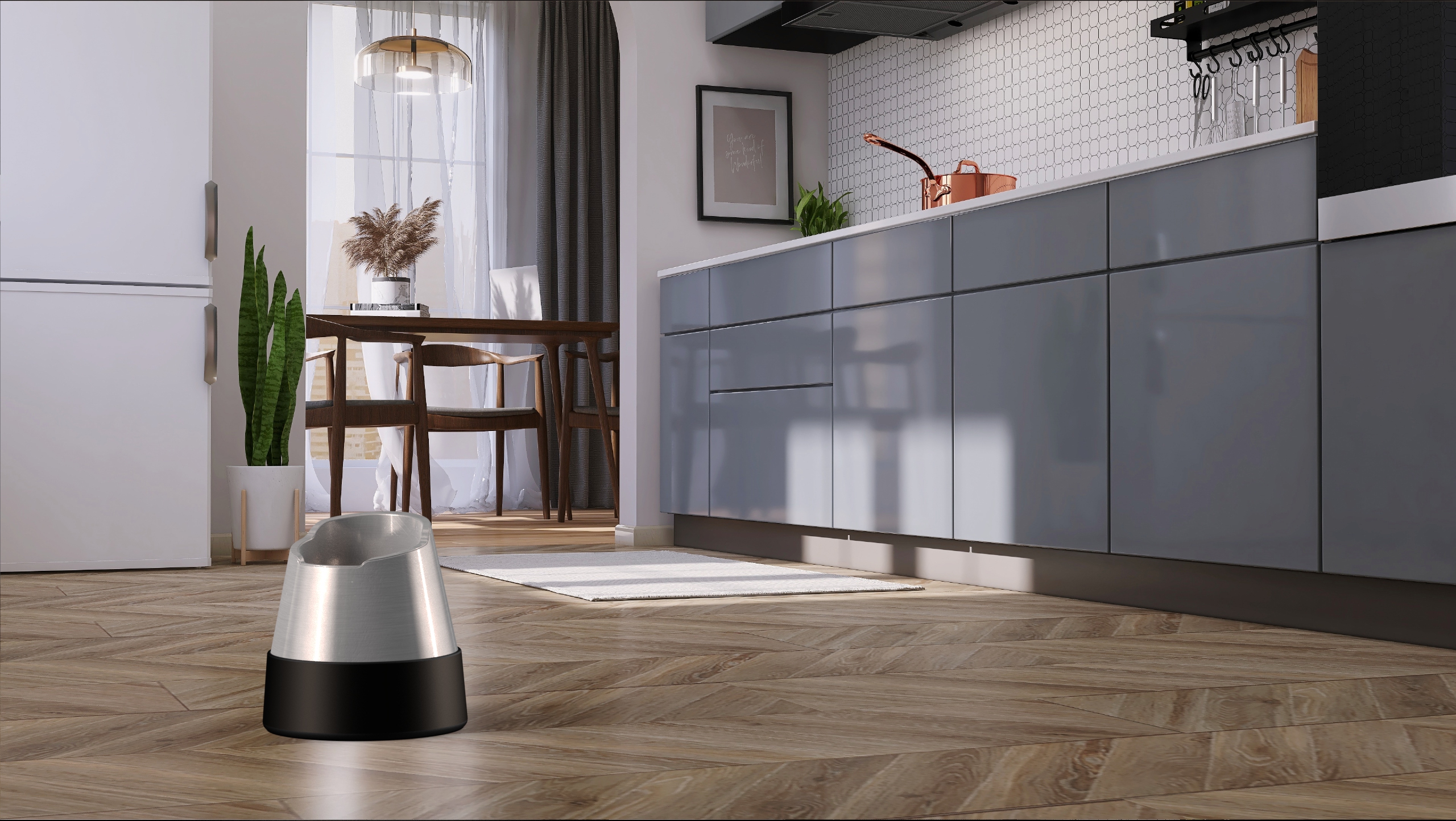
v1 — rough baseline; bowl reads as cutout
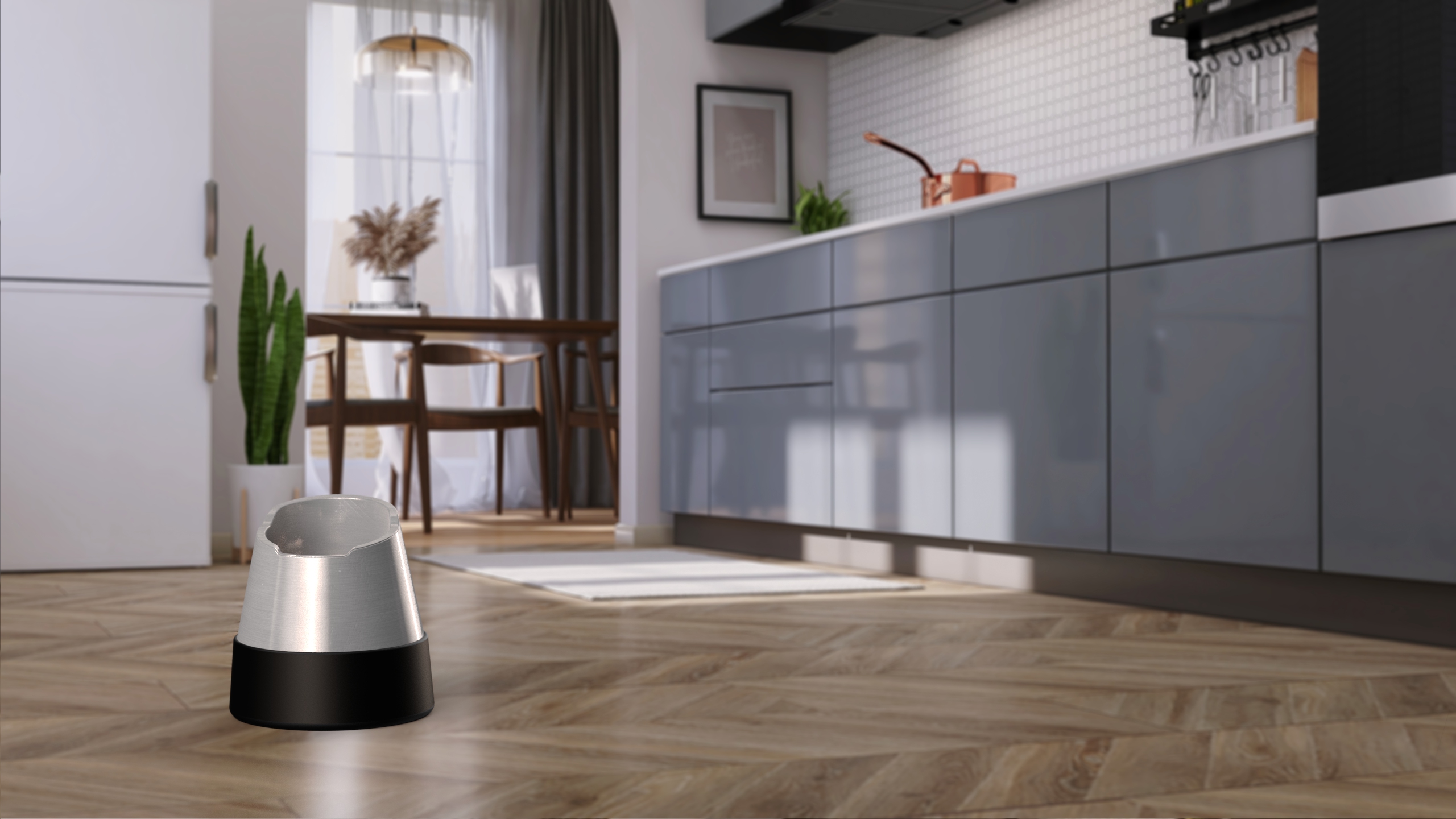
v1.1 — color temp pulled warmer; still floating
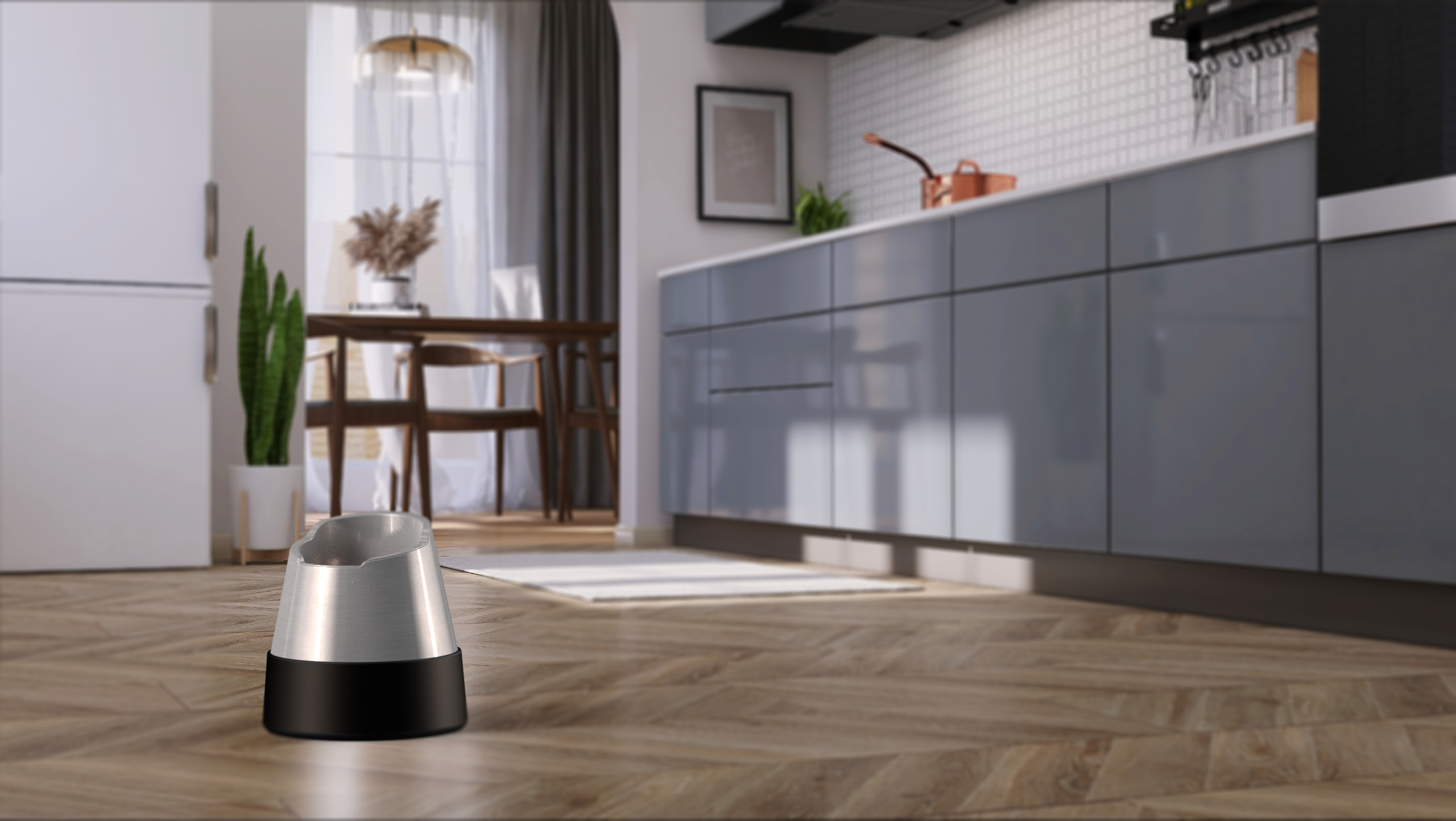
v1.2 — ground shadow softened; base grounding improved
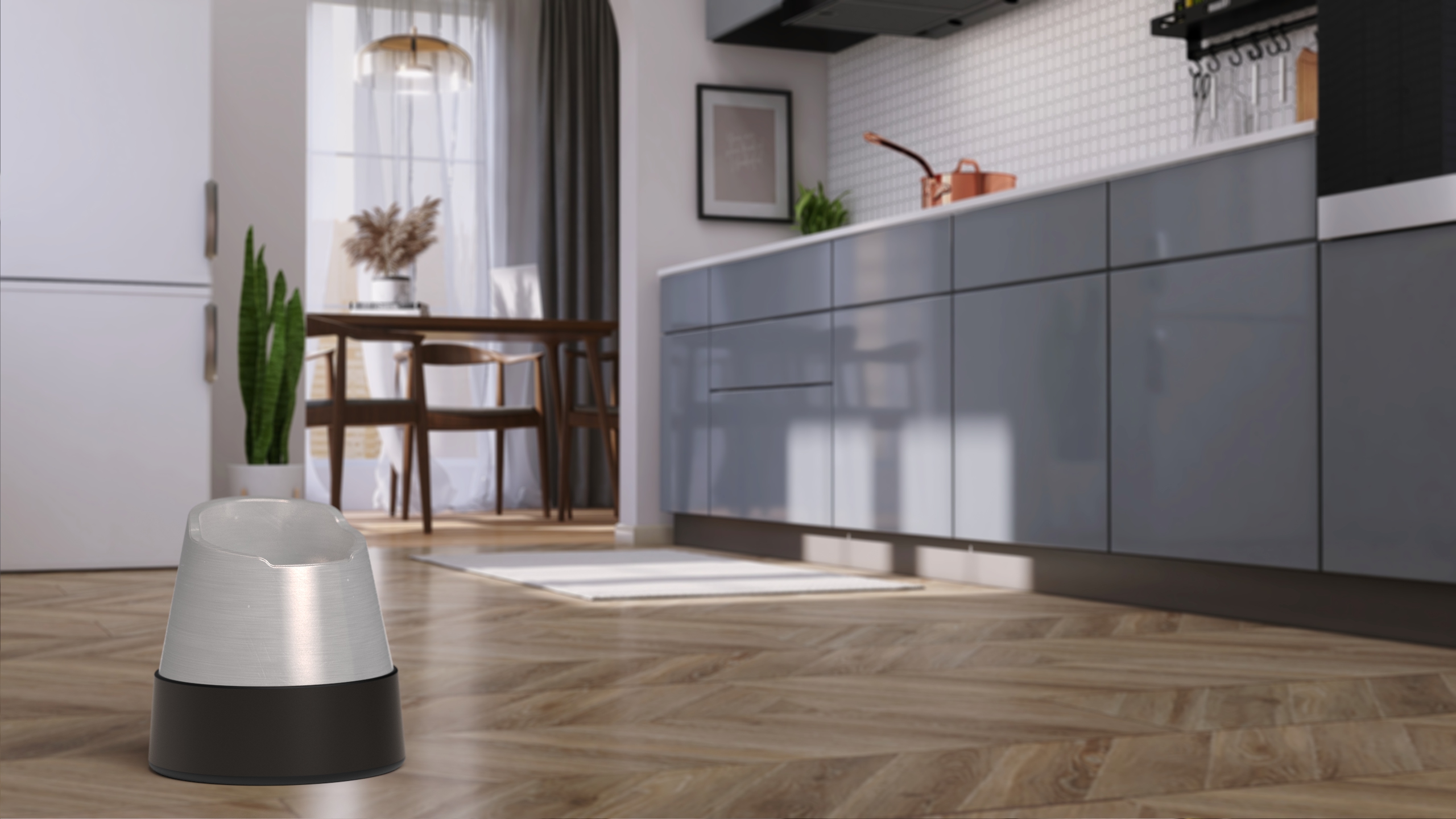
v1.5 — ambient fill added; integration starts to hold
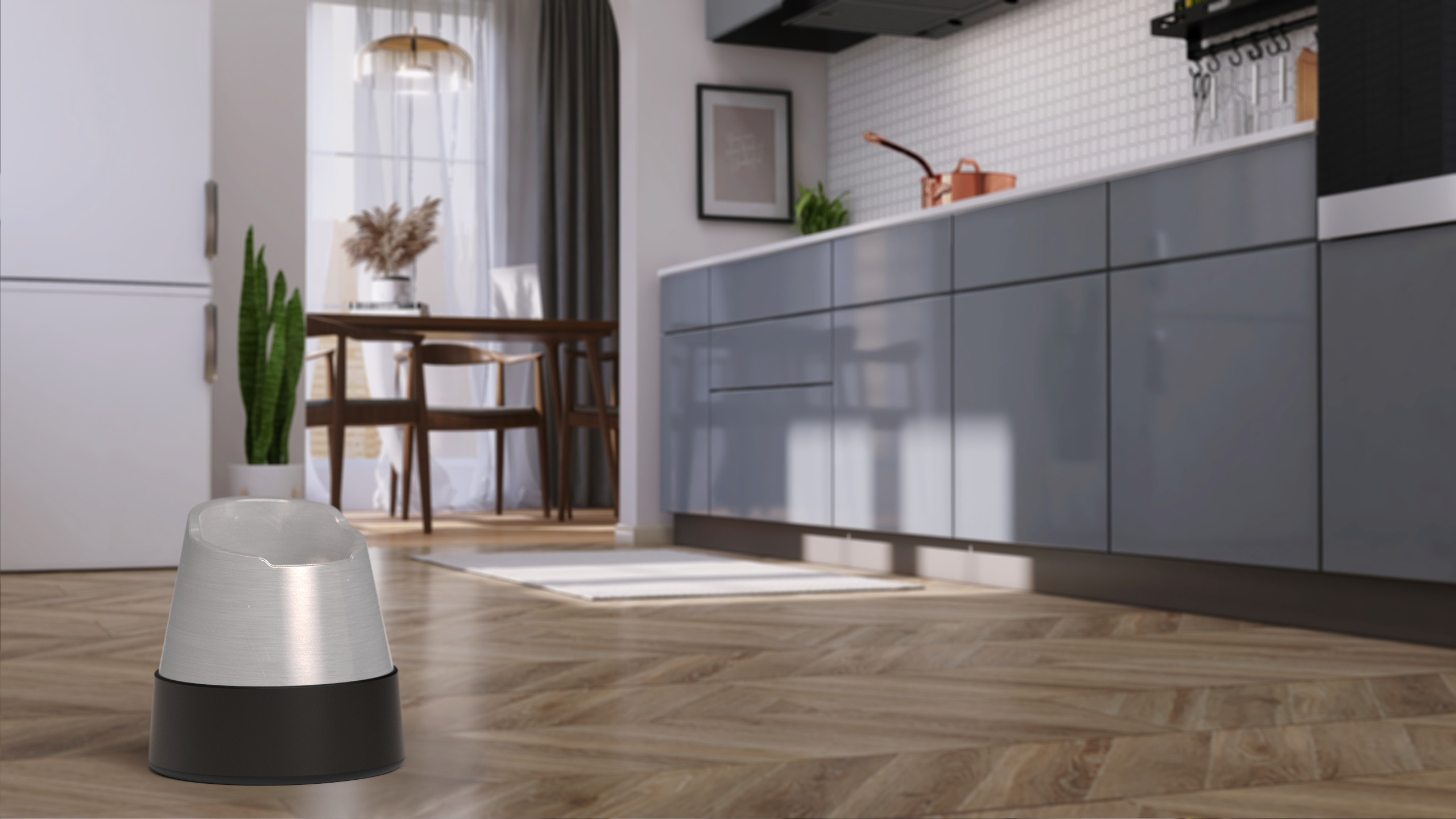
v1.5 + PS — aluminum reflections dialed in; seam reads
Final — Lightroom grade unified; scene holds
If it's sitting on your kitchen floor, it should look like it belongs there.